
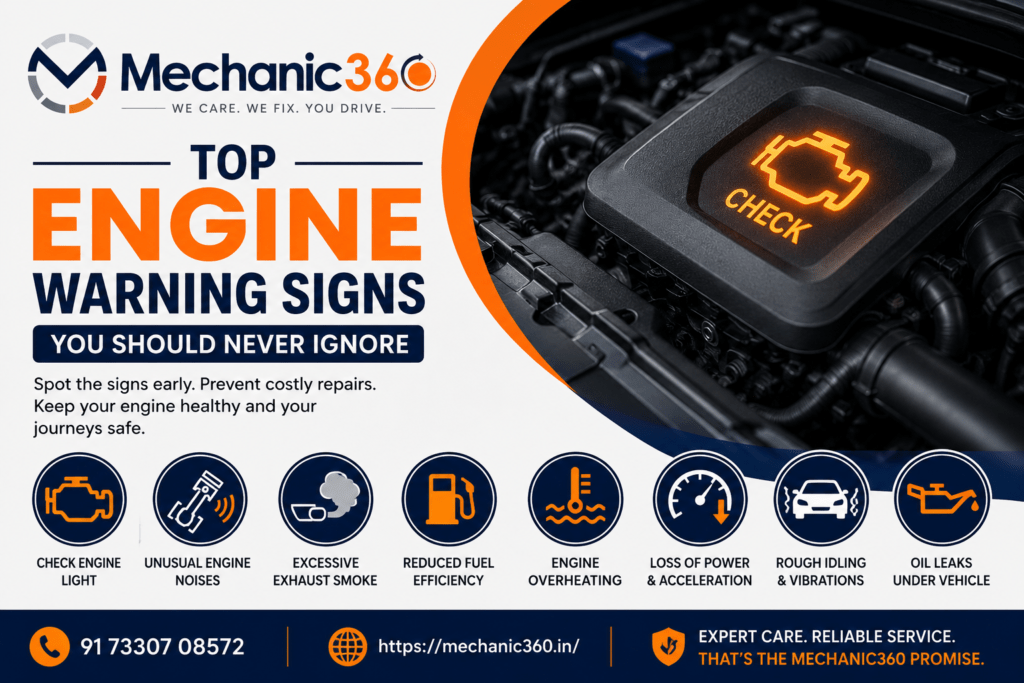
Your vehicle’s engine is one of the most important and expensive components of your car. It powers every journey, whether you’re commuting to work, running errands, or taking a long road trip. While modern vehicles are equipped with advanced technology to monitor engine performance, many drivers still ignore early warning signs until a small problem becomes a major repair.
Recognizing engine problems early can save you thousands in repair costs, improve fuel efficiency, and prevent unexpected breakdowns. In this guide, we’ll explore the most common engine warning signs, what causes them, and when you should seek professional assistance.
Why Engine Warning Signs Matter
Many engine issues start small and develop gradually over time. A minor oil leak, faulty sensor, or worn spark plug may not seem serious initially, but these problems can lead to engine damage if left untreated.
Paying attention to warning signs helps you:
- Avoid costly repairs
- Improve vehicle reliability
- Increase fuel efficiency
- Extend engine lifespan
- Prevent roadside breakdowns
- Maintain vehicle safety
1. Check Engine Light Turns On
The check engine light is one of the clearest indicators that something isn’t working correctly. This warning light can appear for several reasons, including:
- Faulty oxygen sensors
- Loose fuel cap
- Spark plug problems
- Catalytic converter issues
- Fuel injection system faults
While some causes may be minor, others can indicate serious engine trouble. If the light remains on or starts flashing, schedule a diagnostic inspection immediately.
2. Unusual Knocking or Tapping Sounds
Your engine should run smoothly and quietly. If you hear knocking, ticking, rattling, or tapping noises, it may indicate:
- Low engine oil
- Worn bearings
- Damaged pistons
- Timing chain issues
- Valve train problems
Ignoring unusual sounds can lead to severe engine damage and expensive repairs.
3. Excessive Exhaust Smoke
The color of your exhaust smoke often provides clues about engine health.
Blue Smoke
Blue smoke usually indicates that engine oil is burning inside the combustion chamber.
White Smoke
Thick white smoke may suggest a coolant leak or a damaged head gasket.
Black Smoke
Black smoke often means the engine is burning too much fuel due to fuel system problems.
Any abnormal exhaust smoke should be inspected by a qualified mechanic.
4. Reduced Fuel Efficiency
Have you noticed that you’re filling up your fuel tank more often than usual?
Poor fuel economy is often caused by:
- Dirty air filters
- Faulty fuel injectors
- Worn spark plugs
- Oxygen sensor failures
- Engine misfires
When your engine isn’t operating efficiently, it consumes more fuel and produces higher emissions.
5. Engine Overheating
Overheating is one of the most dangerous engine problems.
Common causes include:
- Low coolant levels
- Radiator leaks
- Water pump failure
- Thermostat issues
- Cooling fan malfunction
If your temperature gauge enters the red zone, stop driving immediately. Continuing to drive an overheated vehicle can cause severe engine damage.
6. Loss of Power During Acceleration
A healthy engine should provide smooth and responsive acceleration. If your vehicle feels sluggish or struggles to gain speed, possible causes include:
- Clogged fuel filter
- Faulty fuel pump
- Dirty air intake system
- Engine sensor problems
- Ignition system faults
Reduced performance is often an early indicator that your engine needs professional attention.
7. Rough Idling and Vibrations
When your vehicle is stationary, the engine should run smoothly.
If you experience:
- Excessive shaking
- Rough idling
- Engine stalling
- Vibrations through the steering wheel
The issue may be related to:
- Faulty spark plugs
- Ignition coil problems
- Vacuum leaks
- Dirty fuel injectors
Early diagnosis can prevent further damage and improve driving comfort.
8. Burning Smells from the Engine
Strange odors should never be ignored.
Common smells include:
Burning Oil
May indicate oil leaks contacting hot engine components.
Burning Rubber
Often caused by worn belts or hoses.
Sweet Smell
Can indicate a coolant leak.
Unusual smells are often among the earliest signs of developing engine problems.
9. Oil Leaks Under Your Vehicle
Engine oil plays a critical role in lubricating internal components and reducing friction.
Signs of an oil leak include:
- Dark stains under the vehicle
- Burning oil smell
- Low oil levels
- Oil warning light
Driving with insufficient oil can result in severe engine wear and potential engine failure
10.Engine Misfires
Engine misfires occur when one or more cylinders fail to ignite properly.
Symptoms include:
- Jerking during acceleration
- Rough idling
- Reduced power
- Increased fuel consumption
- Check engine light activation
Common causes include worn spark plugs, ignition issues, or fuel delivery problems.
How Regular Maintenance Prevents Engine Problems
Routine maintenance remains the best defense against major engine repairs.
Important maintenance tasks include:
- Regular oil changes
- Air filter replacement
- Spark plug inspection
- Coolant checks
- Fuel system cleaning
- Engine diagnostics
Following your manufacturer’s service schedule helps identify potential problems before they become serious.
When Should You Visit a Mechanic?
You should schedule an inspection immediately if you notice:
- A flashing check engine light
- Persistent overheating
- Excessive smoke
- Loud engine noises
- Oil leaks
- Loss of engine power
Prompt repairs can save significant money and prevent unexpected breakdowns.
Why Choose Mechanic360 for Engine Diagnostics and Repairs?
At Mechanic360, we provide professional engine inspections, diagnostics, and repair solutions for all major vehicle brands. Our experienced technicians use advanced diagnostic equipment to accurately identify problems and recommend cost-effective solutions.
Whether your check engine light has turned on or your vehicle is showing signs of poor performance, our team can help restore your car’s reliability and efficiency.
FAQs
1. What are the most common engine warning signs?
The most common engine warning signs include the check engine light, unusual noises, excessive exhaust smoke, overheating, poor fuel efficiency, rough idling, oil leaks, and loss of power during acceleration.
2. Is it safe to drive with the check engine light on?
It depends on the cause. A steady check engine light may indicate a minor issue, but a flashing light often signals a serious engine problem that requires immediate attention.
3. Why is my car engine overheating?
Engine overheating can occur due to low coolant levels, radiator leaks, thermostat failure, water pump issues, or cooling fan malfunctions.
4. What does blue smoke from the exhaust mean?
Blue exhaust smoke usually indicates that engine oil is entering the combustion chamber and burning with the fuel.
5. Why is my car losing power while driving?
Loss of power can result from clogged fuel filters, faulty fuel pumps, dirty air filters, ignition problems, or engine sensor failures.
6. How often should I get my engine checked?
A professional engine inspection is recommended during regular servicing or whenever warning signs such as noises, vibrations, or dashboard alerts appear.
7. Can low engine oil damage my engine?
Yes. Low engine oil reduces lubrication, increases friction, and can cause severe engine wear or complete engine failure.
8. What causes poor fuel economy in a car?
Common causes include dirty air filters, worn spark plugs, faulty oxygen sensors, fuel injector issues, and engine misfires.
9. What should I do if my engine starts making knocking noises?
Stop driving if the noise is severe and schedule an inspection immediately. Knocking sounds can indicate internal engine damage.
10. How can I prevent engine problems?
Regular maintenance, timely oil changes, coolant checks, air filter replacement, and professional inspections help prevent most engine-related issues.
Conclusion
Engine warning signs should never be ignored. From unusual noises and reduced fuel efficiency to overheating and oil leaks, early detection can save you from expensive repairs and inconvenient breakdowns. Regular maintenance and timely inspections are essential for keeping your vehicle in top condition.
If you notice any of these symptoms, contact Mechanic360 for a professional engine inspection and keep your vehicle running safely and efficiently.